
On November 20, National President David Neufeld and several members of USJE’s National Office Labour Relations team joined Quebec RVPs Annie Blanchette (RCMP-Justice-PPSC-CSC Community- PBC) and Patrick Menard (CSC) for two CSC site visits in and around the Quebec City area. Many USJE representatives were in Quebec City this week for the fifth and final USJE Regional Conference for 2025.


The first visit took place at the Marcel Caron Community Correctional Centre (CCC) located in Quebec City. The USJE representatives were greeted at the facility by Local President Marie-Pier Tremblay (Local 10077) and CCC Manager, Ann-Frederique Roy-Morin, and given an extensive tour. The tour provided an opportunity for the USJE representatives to meet with front line USJE members at the facility and to learn about the challenging work they perform while assisting offenders in their rehabilitation and reintegration back into the Community.
The USJE representatives were informed that the 40 bed CSC facility houses a very complex, high risk offender population (including many LTSOs). It was identified the CCC is regularly housing offenders at its maximum capacity. Currently, the site is staffed with 4 Parole Officers. With these numbers, the current offender to Parole Officer ratio sits at 1:10. National President Neufeld shared concerns about the Comprehensive Expenditure Review and the impending cuts to CSC’s operational budgets. While it is unknown whether staffing levels at the CCCs will be impacted by the federal budget cuts, President Neufeld emphasized that USJE’s position continues to hold that the ratio should be reduced to 1:8 (as it was prior to the implementation of the Deficit Reduction Action Plan back in 2012).
The members indicated that lowering the ratio would certainly assist in managing the complex offender population. It was also pointed out that staffing all Parole Officer positions indeterminately at this site would be beneficial. It is noted that Marcel Caron CCC has had difficulties staffing positions in the past due to the intense, high stress nature of the work. With the National CCC Working Group recently starting to meet again, and it is USJE’s intention to have the issue of staffing and Parole Officer workloads raised again at the table. It will also be raised by USJE representatives during the ongoing Parole Officer Workload Review with CSC.
It is well understood that operational stress injuries are very common at CCC’s right across this country and that more attention must be paid by CSC to the workload pressures experienced by USJE members. It is also believed that CCCs could benefit from a more gender diverse workplace, especially when having to work with sex offenders who have special conditions imposed upon them by the Parole Board of Canada to reside at the CCC. As indicated earlier, this particular site reports a high number of offenders with Long-Term Supervision Orders attached to their release, which makes the offender population that much more complex to manage.
The USJE representatives with to thank Local President Tremblay and CCC Manager Roy-Morin for taking the time to meet and support this important visit.
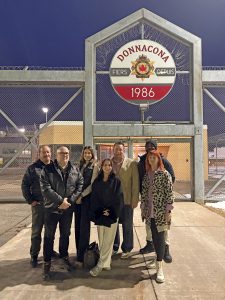
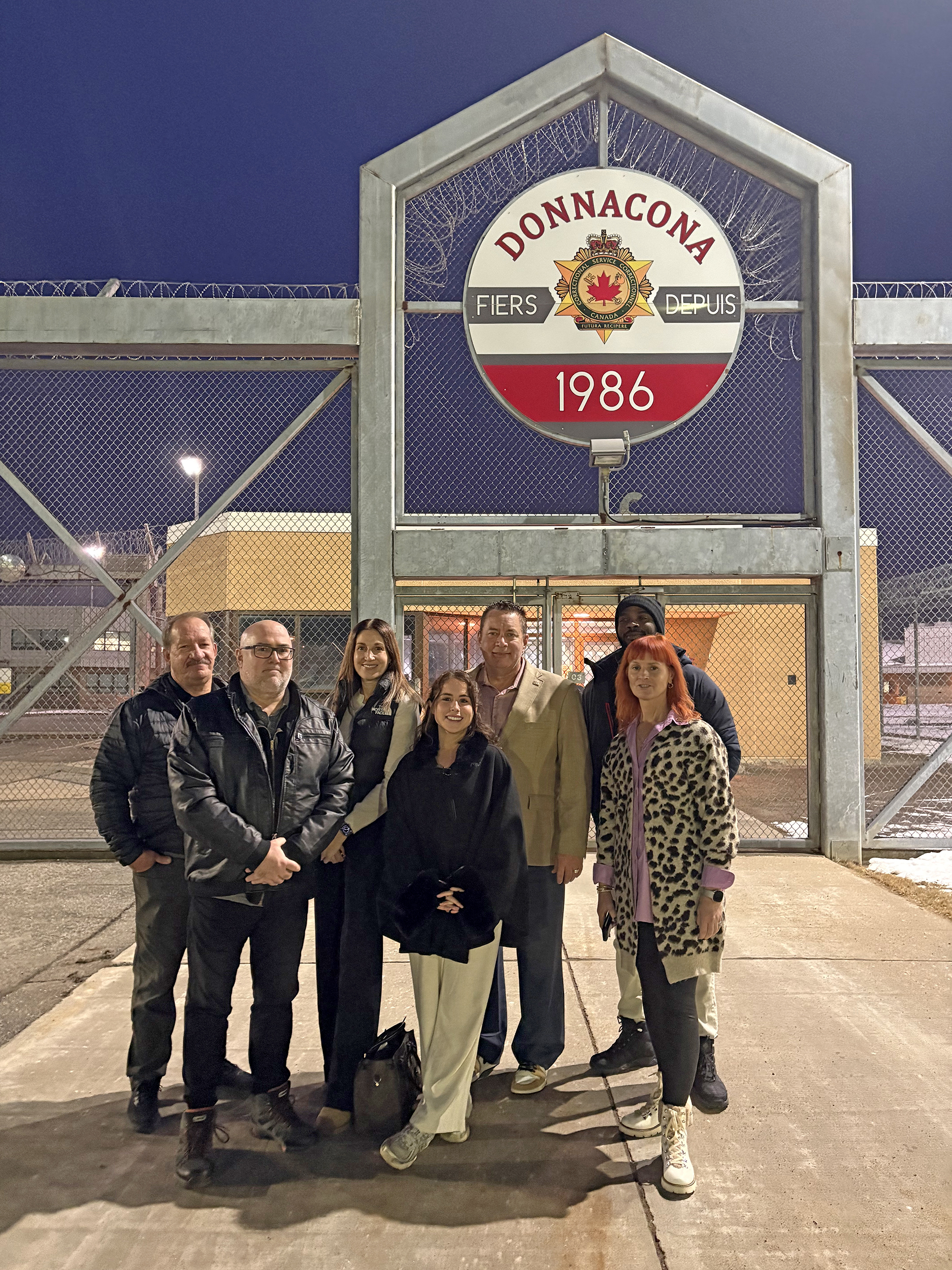
In the afternoon, the USJE representatives attended to Donnacona Institution, which a Maximum-Security institution located 45 kilometers west of Quebec City. The representatives were greeted by Local President Isabelle Verville (Local 10003) and Local vice president, Gérard Gagné.
The visit began with a meeting with the Warden Luc-Pierre Lauzon and Deputy Warden Najat Chaer. The dialogue focused on the “culture” of the institution and how management have strived to make real changes over the past 18 months. It was identified that changing the culture is not easy, and that rooting out harassment in the workplace is a priority. Management certainly felt that some positive progress has been made in this regard. Both management and the local union representatives agreed that they have a good working relationship, with Warden Lauzon identifying that he values the working relationship he has built with the local USJE representatives.
The challenges of working in a Maximum-Security institution were also discussed, including having access to inmates and motivating inmates to follow their Correctional Plans. The USJE representatives then went for a tour of the institution, making stops in the kitchen, laundry, CORCAN, case management areas (Programs and Parole Officer departments), chaplaincy, the library, the general population living units and the Structured Intervention Unit. It is noted that the Structured Intervention Unit (SIU) had 45 inmates on this date, which is a high number of inmates for any SIU unit. It was confirmed that the SIU was fully staffed and is managing the situation. There were some concerns received regarding the Parole Officer workloads, but all indications were that Parole Officers are at or near the 1:30 ratio.
National President Neufeld and RVPs Ménard and Blanchette wish to thank Local President Verville and Warden Lauzon for welcoming the USJE contingent of representatives to the site and for the insight that was provided about operations at the visit.